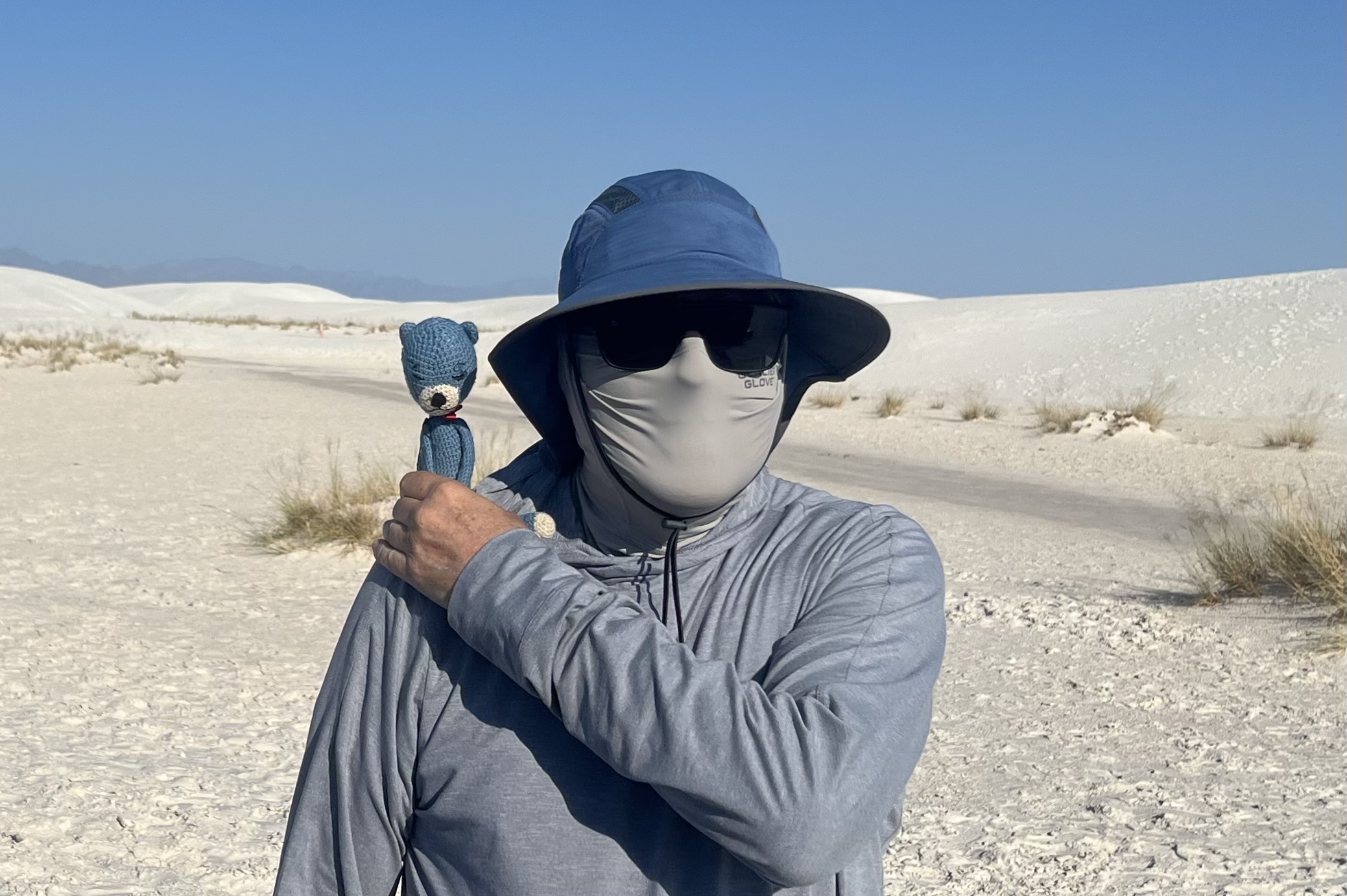
It’s hot and sandy at White Sands National Park, so you have to cover up to protect yourself. Unless you’re a crocheted cat. Then you can just enjoy the sun.
White Sands National Park is in south-central New Mexico near the city of Alamogordo (the closest city to the Trinity Site, where the first atomic bomb was detonated in 1945). It is surrounded by the White Sands Missile Range and is sometimes closed when the range is in use by the military. It was established as a National Monument in 1933 and was re-designated as a National Park in 2020. So as a Park it’s very young – even younger than Blue Cat.
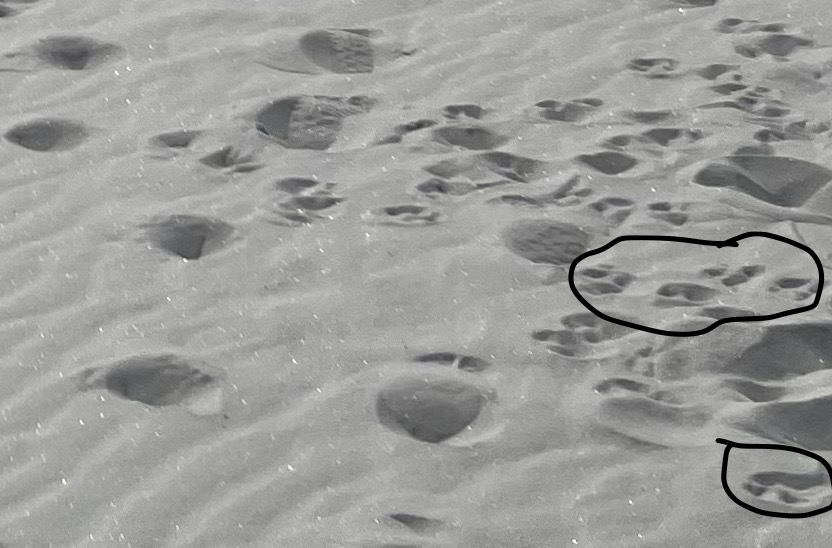
Blue Cat was able to hike through the Park and learn a lot about it. The dunes are not made of the usual quartz – they’re made of gypsum, and their white color makes them cooler than you’d expect in warm weather. The bare foot prints in this image are from a woman hiking, well, barefoot. And she was moving better than Blue Cat.
And the water table is right below the dunes, so plants do a lot better there than you would expect. Some put down big root systems to hold their base in place as the dunes move on, while others grow tall stalks to be above the dune surface as the dunes build up. Here’s a plant whose roots created a pillar of sand that support it even though the dunes have moved away.
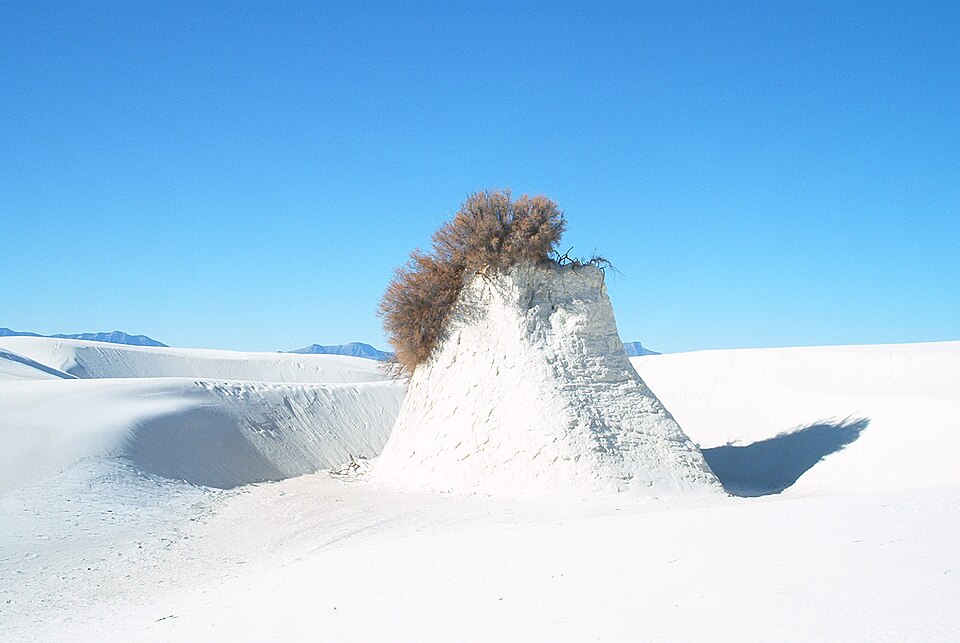
(Photo by Jennifer Willbur, 2004, Creative Commons Attribution 2.5 Generic license)
Blue Cat hiked on two trails. The first was the Dune Life Nature Trail.
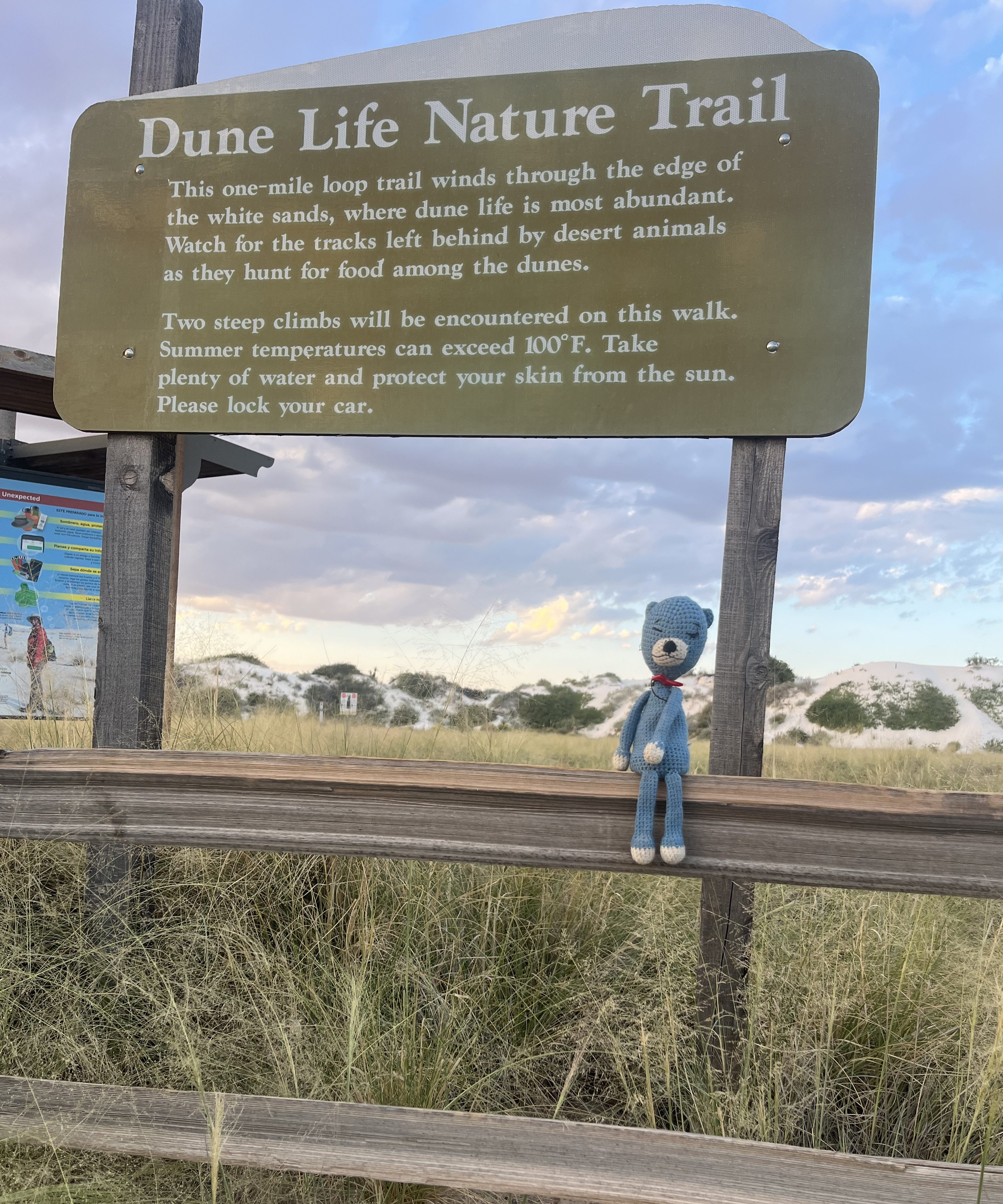
Important Note: Currently the park rangers give a guided tour on this trail Monday through Thursday at 0730 MT, so check with them at the Visitor’s Center when you get to the Park. On it you can learn about the dunes, plants and animals as well as the park and how it changes over time. Don’t miss it!
And what did Blue Cat see? Darkling beetle tracks (they look like bicycle tracks), Kit Fox tracks (they’re about the size of a Chihuahua and are the largest animal that lives in the dune field), soap field yuccas, rosemary mint (the ranger let Blue Cat’s scribe pick a leave and crush it – smelled like rosemary and mint combined) and a whole lot of gypsum sand. That one-mile trail felt a lot longer.
And speaking of longer – Blue Cat’s other hike was the Alkali Flat Trail – about five miles round trip with most of it in soft sand with a lot of up- and down-hill hiking. No shade and no water. And very few folks on the trail the day Blue Cat went, so no help from fellow hikers.
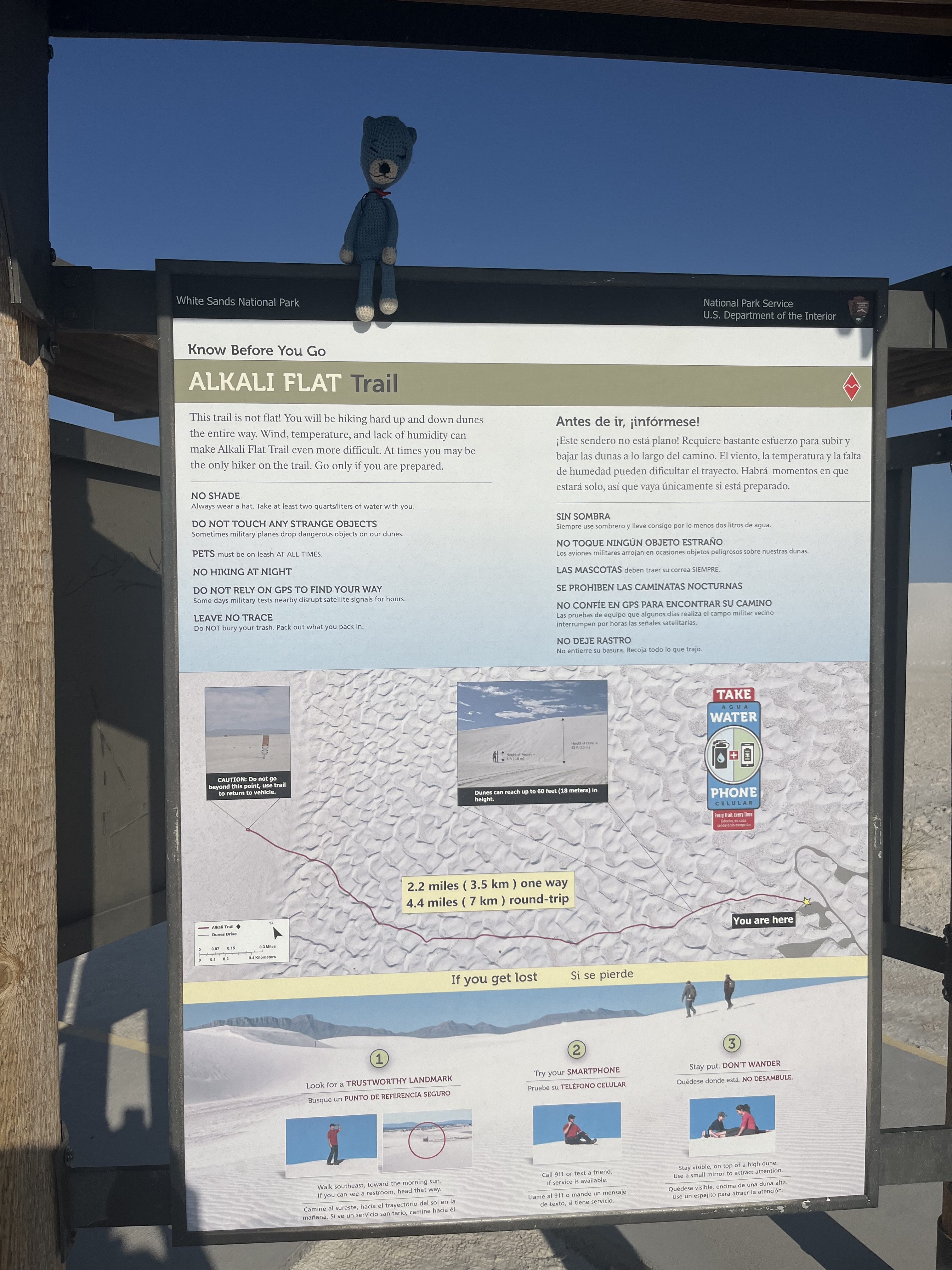
This trail was where Blue Cat saw the hard-to-see Bleached Earless Lizard. Not actually bleached (they’ve evolved over the past couple thousand years to blend in with the sand) and not really earless (they just don’t have external ears). And they stay really still when you come up on them so predators don’t see any movement.
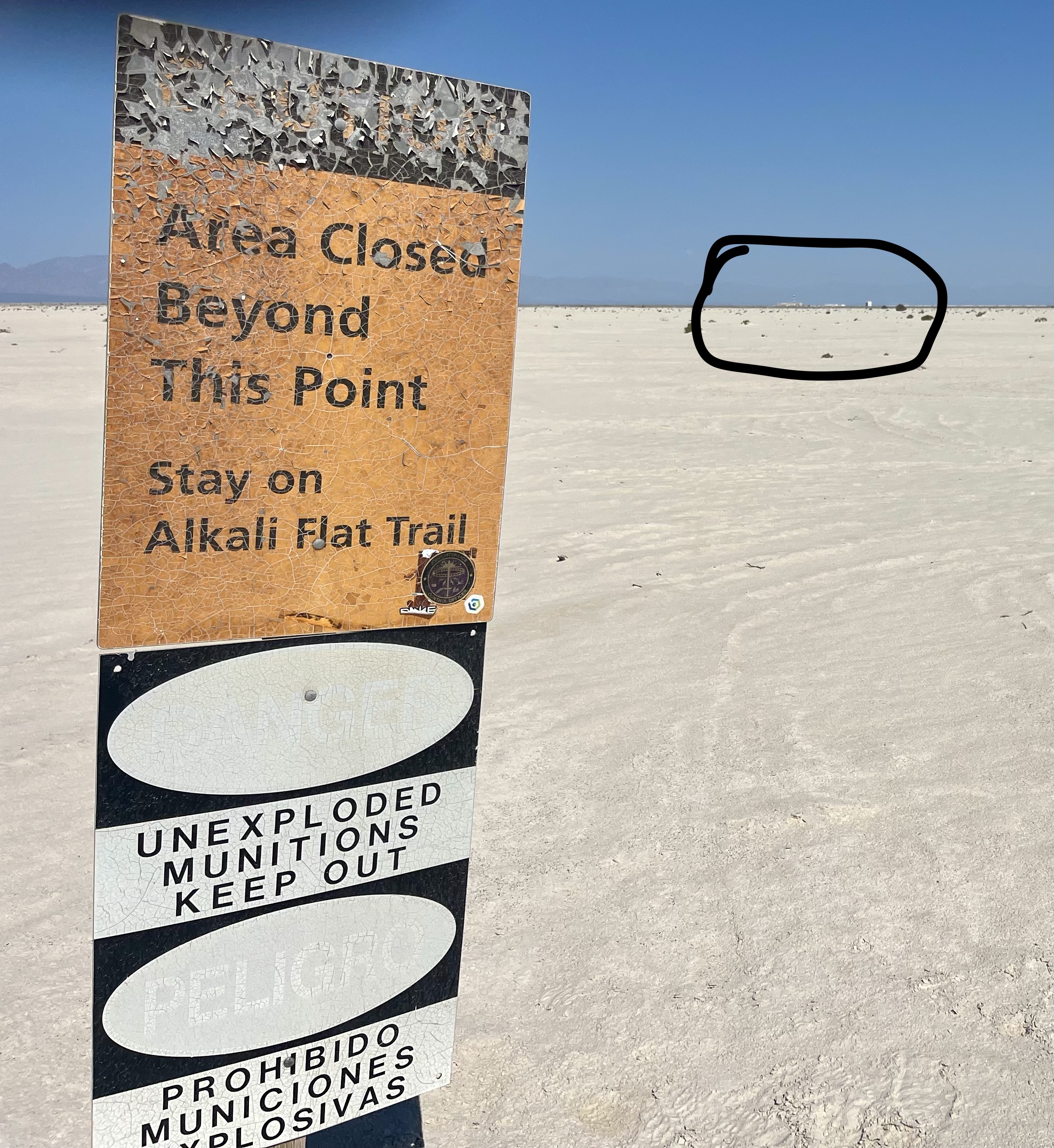
At the turn-around point of the trail? The most compelling sign at the Park. Look closely and you can see a test building on the Missile Range on the horizon in the highlighted area.
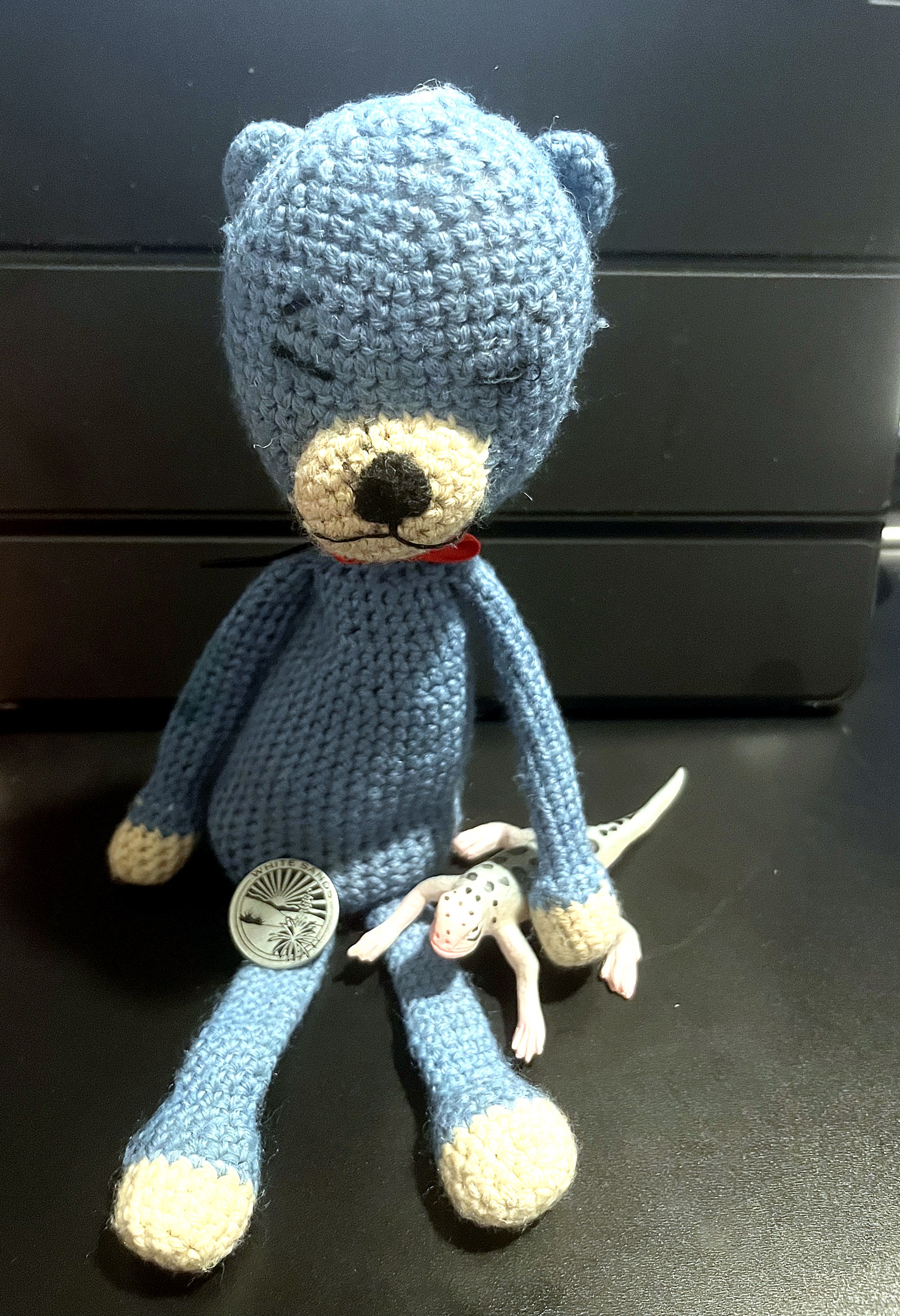
Blue Cat didn’t find any unexploded munitions, run out of water, or get lost in the dune field. He did however make a new friend (one of the aforementioned Bleached Earless Lizards) and got a token for the park.
It was well worth the trip and he hopes that you make time to visit White Sands National Park if you ever get to New Mexico. Just remember to bring plenty of water and your own shade!
© William P Doyle, Jr. 2026

